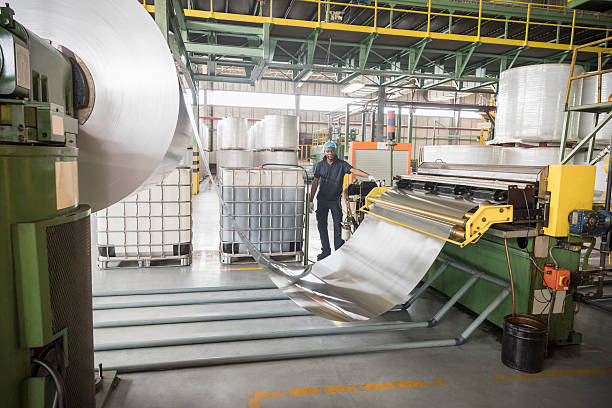

The automotive industry is undergoing electrification and autonomy while a revolution in manufacturing. Emerging trends driven by electric and autonomous vehicles(EVs and AVs) change the approach to vehicle manufacturing design to efficiency and integration of data while considering weight, efficiency, and data interfaces. One area that is undergoing change is automotive sheet metal. Despite technological enhancements in fabrication and materials, automotive sheet metal continues to be a pivotal automotive component.
In this light, custom precision sheet metal cuts of varying shapes and sizes offer unrivaled accuracy and precision catering to the structural, thermal, and other functional needs of EV and AVs. Metal parts that are fabricated with precision are providing solutions to problems that would have been deemed impossible a decade ago, such as battery enclosures, sensor mounts, and modular frame structure.
Why EVs Demand a New Approach to Automotive Sheet Metal
Electric vehicles have unique requirements in comparison to internal combustion engine vehicles. They employ a sophisticated electric motor, an extensive battery pack, and a complex thermal management system, all of which need robust but lightweight components. Traditional approaches to automotive sheet metal fabricated components from steel and alloys for EVs because they focused on weight-negotiated and safety-critical areas like engine compartments and underbodies. EVs, however, need to rethink enclosure and chassis modular protection, weight distribution, and overall chassis modular design.
For example, the integration of battery packs into vehicle floors offers new design opportunities for custom precision sheet metal, but they come with their own problems. Engineers face the added complication of needing to design underbody shields and battery trays that offer weight-efficient crash protection and thermal insulation. That challenge is now solved by using high strength aluminum alloys and stainless steel that can be smartly shaped to provide structural stiffness through laser cutting, bending, and assembly.
Automotive sheet metal is critical for the development of electric vehicles and their modern structural and thermal requirements. Only custom precision sheet metal solutions can fulfill.
Supporting Autonomous Vehicle Technologies with Fabricated Metal Components
Autonomous vehicles differ greatly from conventional vehicles; there is a need for significant integration of sensors, cameras, radar systems, and LiDAR units. These components are often placed in exposed, aerodynamic locations and must be housed in durable, weatherproof, and precisely positioned enclosures. Autonomous vehicles are also sensitive to vibrations and alignment changes, data and system performance is highly sensitive.
Custom precision sheet metal is used to fabricate the required structural and environmental components such as control unit enclosures, sensor housings, and control unit enclosures. Parts are easily and quickly tested and modified due to modern digital fabrication workflows. These workflows also enable rapid iteration based on sensor, software, and design requirements, accelerating the prototyping process.
Assembly precision plays a critical role in system functionality. For enclosures with RF shielding, thermal management, and electromagnetic compatibility (EMC) requirements, these can be addressed during the design stage. Incorporating selection of materials, laser perforation, and ventilation patterns will allow a tailored design that meets system ventilation needs.
Materials And Methods Reshaping Automotive Sheet Metal
Current applications of automotive sheet metal make use of modern materials as well as digital manufacturing technologies to address the specific needs of electric and autonomous vehicles (EVs and AVs). The automotive industry employs the following commonly used materials:
- Aluminum alloys: Some of the most preferred alloys due to their lightweight and corrosion resistant properties.
- Stainless steel: Preferred for use in applications that require strength and heat resistance, for example, in powertrain mounts as well as protective enclosures.
- Galvanized steel: Used for structural members where strength, cost efficiency, and durability are needed.
Alongside these materials, several fabrication techniques are also used.
- Laser Cutting: Prototyping and production both require high speed clean edge cutting and laser cutting fulfills that requirement.
- CNC Bending: Guarantees tight tolerances for uniform part formation.
- Spot and TIG Welding: Provides the necessary structural integrity and aesthetic control.
- Surface Finishing: Adds aesthetic value and necessary corrosion protection for exterior mounted AV parts.
The above techniques and materials create the foundation of custom precision sheet metal fabrication. They make it possible to produce reliable parts that serve structural and electronic functions in EV and AV builds.
Reducing Weights While Maintaining Strength
For EVs and AVs alike, one of the most critical challenges is carefully managing vehicle weight while maintaining the industry’s benchmark standards of safety and structural integrity. Reduced weight in vehicles improves the energy efficiency, range of the vehicle, and reduces wear in critical systems—this is of utmost importance for EVs. At the same time, AVs need to maintain passenger safety, as well as protective sensor safety in various operating conditions.
Custom precision sheet metal fabrication solves this problem. Engineers are able to design metal components that are performance driven while using less material with the help of geometry, ribbing and reinforced weld points. Now, simulation tools are able to stress test metal parts virtually before any production commences to guarantee safety in crashes or torsion scenarios.
In precision metal fabrication, multi material design is the integration of composites or plastics with metal sheets for improved performance. In these hybrid assemblies, precision is critical from metal fabrication to ensure seamless integration in multi material interfaces which only skilled sheet metal fabricators can deliver consistently.
Upcoming Changes in Automotive Sheet Metals for Next-Generation Vehicles
The automotive sheet metal industry will continue evolving as electric vehicle (EV) and autonomous vehicle (AV) technologies advance. Upcoming trends are likely to impact sheet metal fabrication practices as follows:
- Modular Vehicle Platforms: An automotive industry trend that requires sheet metal components that are flexible and can be customized for different vehicle models.
- Integrated Smart Panels: Insets fabricated metal components that require the melding of sensors, antennas, and lights, thus the components become multifunctional.
- Sustainable Manufacturing: Focused on the recycling of materials and the reduction of waste as well as the creation of energy-efficient techniques for manufacturing.
- Digital Twin Integration: Enabling the synchronization of vehicle design data with the tools used for sheet metal automation.
Advancements in automotive technologies increase the need for customized precision sheet metal fabrication to meet vehicle design changes, regulatory requirements, and shifting consumer demands. Robotics, smart technologies, and advanced material science will enable precision metal sheet fabricators to keep pace with the shifting requirements of the automotive B2B market.
Conclusion
The future of mobility revolves around innovation in technology, driven by the safety, efficiency, and intelligence of a vehicle’s software and systems. Automotive sheet metal, long perceived as a passive component of vehicle design, now actively facilitates electrification and autonomy. It now faces a different set of engineering challenges and material evolution requirements.
Manufacturers and B2B suppliers now depend on custom precision sheet metal to ensure the utmost integration, flexibility, and lightweight design for the component parts. The metallic components, from battery trays to sensor mounts, fabricated are integral in shaping the vehicles of the future.
For any organization wanting to lead in automotive innovation, having advanced metal fabrication partnerships will be indispensable to help harness the growth of the EV and AV industries.