
Key Takeaways
- Identifying and understanding the most pressing risks is foundational to adequate business protection.
- Insurance strategies should be tailored to the specific needs and vulnerabilities of each business.
- Regular coverage reviews and technology-driven processes are essential for ongoing risk management.
Running a business brings opportunities, but it also exposes owners to consistent risks that may threaten their financial health and continuity. From accidental property loss to modern cyberattacks, vulnerabilities are varied and demand a more nuanced approach than a one-size-fits-all solution. Proactively protecting your company with business insurance is one of the most strategic decisions you can make to support long-term growth and sustainability.
Insurance plays a vital role in everyday risk management, acting as a buffer against the unexpected scenarios that businesses encounter. Whether you’re dealing with natural disasters, workplace incidents, or digital threats, the right insurance can mean the difference between business recovery and severe disruption.
Commerce leaders often underestimate the full spectrum of risks until a significant event occurs. By understanding insurance options and integrating them into a broad strategy, you can minimize financial losses while safeguarding your brand and assets against both traditional and emerging dangers.
In addition to traditional business risks, today’s enterprises must be vigilant about how digital and regulatory factors can reshape their exposures over time. As these threats evolve, your insurance solutions must be adapted continuously to ensure complete protection and compliance.
Identifying Common Business Risks
Every industry faces its own set of hazards, but several types of risks impact nearly all enterprises:
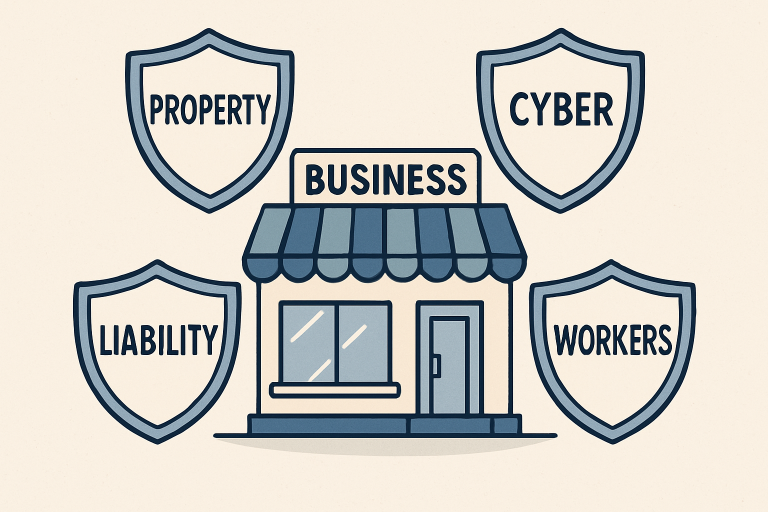
- Property Damage: Severe weather, fire, vandalism, and accidental events can cause significant damage to offices, warehouses, and inventory.
- Liability Claims: Customer injuries, third-party damages, or professional mistakes can result in lawsuits or settlements.
- Employee Injuries: Workplace accidents can lead to medical bills, workers’ compensation claims, and lost productivity.
- Cyber Threats: Data breaches, hacks, and other digital threats compromise sensitive business and client information.
Recognizing and mapping out these fundamental risks is the first step in mitigating their impact. Risk awareness, followed by comprehensive coverage, allows companies to respond confidently to potential crises.
The Role of Business Insurance in Risk Management
Business insurance provides a crucial line of defense by absorbing the financial shock from a range of adverse events. Key benefits of maintaining robust insurance policies include:
- Financial Protection: Insurance covers the cost of property repairs, legal claims, and liabilities so your revenue streams remain intact.
- Business Continuity: With proper coverage, operations can resume quickly after disruption—minimizing revenue loss and protecting payroll.
- Legal Compliance: Many industries require specific coverage to comply with regulations and contractual agreements.
Proactively shifting certain risks to a trusted insurance provider allows business owners to focus on expansion and innovation, rather than operating under the constant threat of potential catastrophe.
Tailoring Insurance Coverage to Your Business Needs
Insurance should never be treated as a mere checkbox. Every business requires a mix of products and limits tailored to its operational model, industry regulations, and location. The most critical options to assess include:
- General Liability Insurance: Protects against claims related to bodily injuries and third-party property damage.
- Property Insurance: Shields physical assets—such as real estate, inventory, and equipment—from covered perils.
- Workers’ Compensation: Supports employees with benefits after job-related injuries or illnesses.
- Cyber Liability Insurance: Provides financial support and resources if your business experiences a cyber incident.
Consulting with insurance professionals familiar with your sector can help identify coverage gaps, emerging risks, and ways to optimize your insurance portfolio for maximum value and protection.
Regularly Reviewing and Updating Your Insurance Policies
Risk environments are never static. New threats emerge, regulations change, and your business may evolve into new products or expand into new geographies. Regular insurance reviews ensure that your coverage continues to align with real-world risks, eliminating unnecessary options and updating or expanding policies as needed. This diligence can even reduce overall premiums by removing redundant coverage and focusing resources where they are most needed.
Integrating Insurance into Your Overall Risk Management Strategy
Insurance is vital, but business resilience hinges on a broader risk management approach. Best practices include:
- Conducting risk assessments involves identifying both internal and external risks, evaluating their potential impact, and prioritizing response strategies.
- Implementing Preventive Measures: Establishing internal controls, security systems, and process improvements to proactively minimize risk exposure.
- Training Employees: Providing regular education on workplace safety, cyber hygiene, and emergency procedures to support a risk-aware culture.
Comprehensive risk management frameworks combine insurance with operational safeguards to ensure a flexible yet robust defense against diverse threats. Regularly reviewing and updating policies ensures they evolve in line with emerging risks and changing business needs.
Leveraging data and analytics enables businesses to anticipate trends, identify vulnerabilities, and make informed mitigation decisions.
Collaboration with trusted advisors and industry peers can provide additional insights and strengthen overall risk preparedness.
Leveraging Technology to Enhance Risk Management
Innovative technologies are reshaping risk mitigation across all industries. For example, AI-powered process automation reduces human error, increases efficiency, and identifies previously underappreciated vulnerabilities. In the insurance sector, AI-enabled process mining is driving more accurate, data-driven decisions, benefiting both insurers and policyholders. These digital tools enable businesses to monitor, analyze, and respond to risks in real-time, providing enhanced protection without the need for additional staffing or resources.
Conclusion
Effectively managing day-to-day risks is essential for the sustainable growth and reputation of your business. By understanding key exposures, tailoring the right mix of insurance coverage, integrating risk management into everyday operations, and leveraging new technology, you can create a resilient foundation for success—even in the face of unexpected challenges. Periodic policy reviews and the adoption of new technologies will strengthen this framework, keeping your business protected in a rapidly changing world.