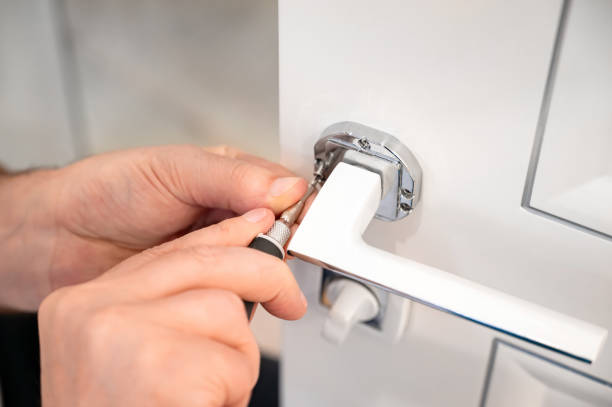

In contemporary industrial settings, securing and ensuring reliability of automated systems 24 hours a day is critical. An industrial lock is one of the ways to safeguard systems. For B2B companies, operational, equipment, and downtime losses can be lessened with the design and functionality and how operational needs of a business are met by a trusted industrial lock manufacturer. This paper attempts to discuss the new things about industrial locks and the role they play for the safety of the automations.
Industrial Locks in Automation
Industrial locks are more advanced kinds of locks specifically designed to provide security for cabinets, panel, machinery, and other vital equipment in an industrial setting. Unlike the rest of the ordinary locks and bolts, industrial locks are designed to be used for a long time and can subsist in extreme environments like dirt, moisture and temperature.
In B2B business formats, dealing directly with industrial hardware sellers that are reputable and well known can ensure industrial systems are safeguarded from unauthorized access and accidental damage. Industrial locks are a must have for the proper safety and efficiency of the systems in operation.
Sensitive electronics, control modules, and costly pieces of equipment are often incorporated together with other devices in automation systems. With these systems, proper industrial locks make it possible for authorized personnel to inspect, maintain and carry out emergency interventions while keeping everything safe and secure. Thus with these systems, dual functions can be established such as uninterrupted industrial functions as well as safe guarding of the equipment.
How Industrial Locks Enhance Security
In the field of industrial automation, security is no longer defined by the absence of theft. Locks installed in the industry are safeguards against unintentional contact, tampering, and environmental hazards. Poorly manufactured combinations can lead to misaligned panels, improper closures, and even worse, unauthorized entries all of which are operational and safety failures.
It is the role of the manufacturer of the industrial locks to incorporate releasable locking devices, mechanisms that can’t cause corrosion, and constructions that can’t be tampered with and other sophisticated design elements. These locks are tested for high-cycle use to ascertain that even with the drubbing of other devices in the industrial zones, the devices will continue to perform.
In a busy industrial working space and the high quality locks are fitted, the operators can eliminate any case of downtime as the locks eliminate interference that are uncalled for along with cases of accidental openings. These automations also enable the operators to adhere to multiple legislations as these systems are built to ensure safety standards which permits controlled and enclosed cabinets. These mechanisms ensure automated equipment are rested safely to protect them from hazards such as dust, moisture, and vibration.
Major Factors to Consider for Industrial Locks Selection
Choosing an industrial lock for an automation system should consider several operation and environment parameters. Some of these parameters are:
* Strength and Load Consideration: The lock should be able to endure the operations of frequent use and heavy panels, and door mechanisms.
* Lock Material: The most appropriate materials for industrial setting, especially corrosive environments, are stainless steel and cobalt alloy.
* Type of Locking Mechanism: The operational and access control parameters help to determine the type of lock to use, options include cam locks, latch locks, and electronic locks.
* Performance Environment: Dusty, humid, chemical, and extreme temperature conditions should not affect the lock performance.
* Legal and Safety Compliance: The functional and legal dependability of the operation ensures locks selected are industrial standard locks for safety compliance.
Taking the outlined above into consideration, all B2B operators are capable of installing reliable, non-bypassable industrial locks tailored to their automation systems.
Having an industrial lock manufacturer as a partner brings the following benefits
For any B2B entrepreneur, having a tight relationship to manufacturer locks has the following benefits.
- Reliability: The locks are installed only after stringent tests for life span and dependability have been performed.
- Customization Options: Tailored approaches e.g. special measurements, finishes, locking systems, etc. are bespoke solutions offered by several manufacturers.
- Operational Efficiency: Seamless functioning of well-structured locks enhances operational efficacy by maintaining the system, hence, avoiding unplanned downtimes.
- Safety and Compliance: Legal and compliance issues coupled with safety regulations are intertwined with business operations. Hence, reliable locks secure the boundaries of an organization.
- Reduced Total Cost of Ownership: An organization minimizes the total cost of ownership by installing high-quality locks, as the replacements and replacements are fewer thereby reducing the cost.
Along with cost reduction, the operational productivity of the system reinforces the importance of industrial locks.
Best Practices for Installation and Maintenance
B2B entities must employ a number of techniques for the most reliable industrial locks.
- Professional Installation: Misalignment and malfunction of locks may occur if the manufacturer instructions are not followed.
- Regular Inspection: Issues such as wear, rust, or malfunctioning must be addressed before they escalate in severity.
- Lubrication and Cleaning: Locks must be kept unobstructed by debris in order to be lubricated for smooth functioning.
- Load Management: Strain or stress must not be put on the locks, panels, or doors.
- Replacement Planning: Used and broken locks should be methodically replaced in order to protect the status-quo improvement in security and operation efficiency.
Automation locks and other locking devices have performance and useful life enhanced by the practices above.
Conclusion
The security, effectiveness, and reliability of most automation systems heavily depend on the presence of industrial locks that serve as crucial elements of the system. Appreciated insights regarding industrial locks, that come from the trusted manufacturer of the devices, help B2B businesses to plan on the most suitable ways for industrial locking devices to be installed and serviced.
Industrial bolts are central to securing any B2B operation, having the ability to help safekeep sensitive electronics and other high value equipment, along with regulatory compliance and operational continuity. Buying industrial bolts from a trusted industrial hardware supplier will not only protect the assets, but also improve productivity by reducing unnecessary downtime, and a safer workplace to operate in.
Industrial operators should within a system of organization and management treat automation systems as sophisticated equipment that will protect operational personnel and equipment, and have enhanced industrial efficiency for an operator in a B2B context.