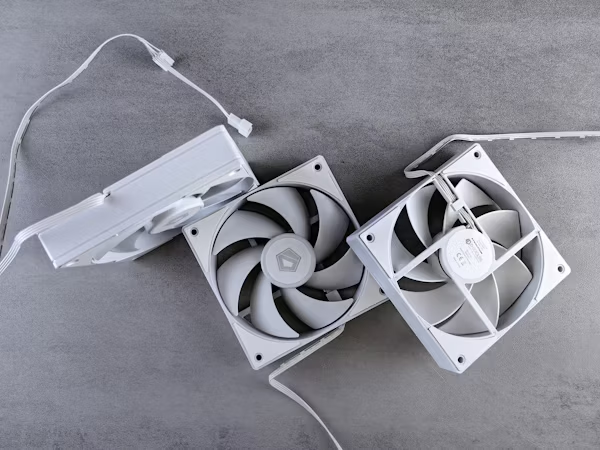

In modern companies, data centers are invaluable assets. These are the systems responsible for controlling and managing huge volumes of data. Data centers must function without interruptions, for periods of downtime may result in great losses. Data centers are usually equipped with electrical enclosure ventilation and server rack cooling fans which enable maximum efficiency and minimal downtime.
A data cooling server rack uses cooling fans to control the temperature of the equipment. Proper temperature management helps to avoid overheating and equipment module failure. This article focuses on best practices for server rack fans data center cooling supervision, the cost associated with the cooling fans, and their core benefits in enhancing operational efficiency while minimizing productivity disruptions. Furthermore, we will analyze the role of electrical enclosure ventilation in server cooling systems.
Functions of Cooling Fans Rack Servers in a Datacenter
The powerful servers in great numbers in a data center generate a lot of heat that needs a constant flow of air for cooling. Air circulation around the equipment is done by server rack cooling fans which draws in servers hot air and in the process, heat is removed from the server. This type of cooling is vital in order to reduce the temperature of the machines to the preset value so that proper functioning of the machines is ensured.
There is a threshold limit beyond which cooling air should to and effective circulation done, the server components will continue to heat. In extreme cases, even server crashes and hardware components being permanently damaged is a possibility. This is done by the rack server cooling fans, which support the proper environmental conditions for sensitive equipment by making sure sufficient heat is dissipated.
Cooling fans rack servers data centers with the rest of the world now have greatly enhanced internal temperature control. This has provided a more efficient and effective means of managing the internal workings of the data centers.
The various methods of cooling servers in data centers are described in the preceding sections.
In data centers, the equipment effectiveness, and especially, the equipment lifespan, are dictated by how well the electrical enclosure’s ventilation is done. The ventilation of electrical enclosures systems retain ambient temperature below the specified upper limit. Server rack cooling fans are integral components of these systems. The air is actively exchanged by the fans in the unders and overs sections of the server racks in order to reduce server rack and subsystem hotspots while stabilizing system MAC and air control in the server racks.
These fans save the equipment in the data center from hardware damage due to excessive heat. The fans also lessen the amount of cooling that must be done to the data center and the center cooling architect control modular, so the cooling modular are functioning acceptably. Equipment in enclosures that are well ventilated still assure that the system’s fans do not overexert themselves in an effort to supply the system with energy, therefore prolonging the equipment’s lifespan.
While the reason behind the downtime of a data center caused by overheating and malfunctioning of a data center server is costly, the data center downtime is costly as well. These cooling fans prevent the equipment from overheating and maintain a balanced equipment temperature, and thus, they help reduce the risk of overheating equipment. The fans also control temperature spikes and ensure that critical limits and thresholds are not crossed and thus are never allowed. The reason behind server overheating is malfunctioning, and overheating is never a good thing. The server components such as the processors, memory module, and hard drives are sensitive and therefore, without cooling systems, they are prone to overheating. The server can overheat, and in some cases, the server can totally malfunction.
Spending very little money on the business can provide a very large return on the investment by not only paying the costs to avoid repair and replacement of the equipment, but also by continuing the data center’s smooth and consistent operations by incorporating the fan systems.
The utilization of the cooling fan systems in a data center directly affects the center’s temperature, and therefore, the cooling server rack fans take an important part in the center’s overall Power Usage Effectiveness, or PUE.
Data centers have ventilation for boxes of electronics. During cooling, temperature reduction is accomplished. Because of this, cost savings and the carbon emission savings for the data center will help with the negative carbon business perspective.
Also, these products have other advantages, such as having the cooling system operate without disturbance to the personnel working in the data center.
Ways for Adding or Retrofitting Server Rack Cooling Fans in the Data Center
Reliability of silence is paramount along with the fans having enough airflow.
System Orientation for Fans: Just like the server racks, fans should also be oriented such that the overall airflow is beneficial and useful for the purpose of cooling. Cooling streams also need to be oriented in the same direction as the airflow from the fans for maximum cooling.
VSD Fitting: Operational cost savings and the reduction of carbon emissions is a bonus for any center utilizing these measures.
System Optimization: Just like any other piece of machinery, cooling fans need attention every so often so they can work optimally. Resources can be saved by avoiding time-consuming fan repairs, cartridge replacements, and more, as system efficiency can be maintained with fan servicing and monitoring of general wear and tear.
System Monitoring and Management: Integrating monitoring systems that can detect cooling fan performance issues, along with Remote IT capabilities, amplify cooling fans. Cooling fan optimization, fine-tuned from the data center, decreases net energy usage.
Conclusion
For data centers, server rack cooling fans are an essential resource required for the effective and superior operation of the facility. Installed fans control the average temperature, downtime, and energy spent of the electrical enclosure ventilation of sensitive equipment. In addition, they boost system reliability by enforcing minimal drift during sensitive operations.
Data center cooling solutions help to maintain operational efficacy paired with minimized equipment failure. On the other end, server rack cooling fans provide affordable and efficient cooling, ultimately ensuring the protection of sensitive data in data centers and other important systems by enforcing rack server fan speeds. With the cooling fans in place, the collected rack server fans can prevent system data drift.