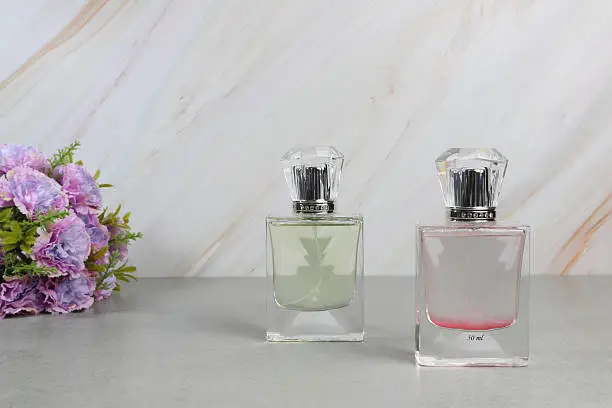

Few materials in today’s packaging have the versatility to be functional, aesthetically pleasing, and environmentally friendly like glass. The glass jar and bottle manufacturing industry is a perfect blend of design and precision for B2B companies. Glass packaging, whether it is for gourmet food items or upscale cosmetic products, conveys a business’s devotion to quality packaging, commitment to environmental sustainability, and responsibility towards their brand image.
For glass bottle suppliers, the evolution of the industry has changed production standards and inspired new forms of customization, sustainability, and automation. The glass jar manufacturers have been able to successfully merge form and function, and this is how B2B clients, through strategic sourcing partnerships, can derive immense value.
The Understanding of Glass Jar Manufacturers in Today’s B2B Marketplace
From food and beverage producers to pharmaceutical companies and luxury cosmetic brands, glass jar manufacturers are essential collaborators in many industries. Their contribution goes beyond production: they provide protection, shelf visibility, and distinct branding through differentiation.
For B2B buyers sourcing glass manufacturers, every glass manufacturer must be evaluated on material, quality, consistency in production, design flexibility, and cost efficiency. A supplier must also take into account food and beverage safety, pharmaceutical, and cosmetic industry regulation and requirements.
This holistic approach also makes sure that every glass jar and glass bottle is visually appealing and performs with high functionality in storage, transport, and display. As glass bottle suppliers advance, their ability to incorporate new and advanced forming technologies and sustainable design practices enables them to create high quality containers that help brands achieve their business objectives.
Balancing Functionality and Aesthetics in Glass Packaging Design
A key challenge in glass jar manufacturing is learning how to find that balance to make something both practical, while also looking beautiful. B2B customers almost always want packaging that protects contents from light, moisture and other contaminates, while also being on-brand.
For instance, food producers might prioritize how easily it is to seal the jar in an air tight way and how not, it might break during transport, while a skincare company is likely more concerned with how the glass looks (transparency, color tone) and user experience (tactile design) when they open the jar. Glass manufacturers meet these differing needs by employing design and production techniques such as:
- Precision Molding – Automated forming with molding to achieve specific and constant wall thickness and shapes.
- Decorative Finishing – Brand distinction via frosting, coating, or embossing.
- Coloring Engineering – Determining the choice of color by a specific purpose such as UV protection or complete corporate branding.
- Ergonomic Design – Shaping the jars to be user friendly from both a pouring and gripping perspective.
These developments add to the functionality of glass and make it a canvas for art. Glass is unique in that it can be perceived and touched. In the realm of B2B glass marketing (especially for luxury products), the ability to communicate authenticity and quality is a massive advantage.
The Art of Manufacturing: Glass
Processing glass is an art. Fusing chemistry, thermal engineering, and control systems, the art of glass production is a delicate one.
Raw materials—mainly carbonate and sand—require melting in a furnace that exceeds temperatures of 2,600°F. Because of the range of desired outcomes, these materials must be blended to a furnace for tailored control. Uniformity of a desired outcome is then achieved through automated high production production lines. Molds (sub-regional automated forming systems) bypass the trouble of multiple assemblies.
To gain consolidated glass production for decades, suppliers like Owens-Illinois, use IS machines. Today many glass bottle suppliers use automated inspection systems, which also allow for fully automated glass production lines.
As is the case for many B2B glass bottle suppliers, production today is not only made to be more economically but also more sustainable. This is why many glass production factories have opted for integrating recycled glass (cullet) savings glass. While the recycled glass is less energy consuming to process, it also saves more energy in the production cycle than the glass would use, less than 10% of the energy would be used.
The intersection of rigorous performance benchmarks with creative design customization is assured by the application of science.
Customization and Innovation: The Link Between Manufacturers and Brands
The globalization of the packaging industry is highly influenced by the ability to offer customized packaging. B2B buyers are looking to develop unique packages that capture the essence of their brand and their market position. This has resulted in glass manufacturers offering a wide array of personalization services such as custom molds, logo embossing and other surface treatments.
A good example is the case of some luxury skincare brands. Such companies often engage in close collaboration with custom perfume bottle manufacturer partners and glass bottle suppliers to develop packaging that aligns with the fragrance and its functional requirements. These collaborations provide brands with the opportunities to select their preferred features in the packaging such as shape, level of opacity as well as closure mechanisms to improve pointed usability and shelf presence.
A notable example of such technologies is the use of 3D modeling with rapid prototyping and laser engraving which minimizes design to production time. This has enabled manufacturers to stay current with standard frameworks.
In addition, the use of smart packaging such as integrating RFID and scannable QR codes into glass containers is increasingly popular in B2B logistics and inventory management. This moves glass packaging beyond visual design to provide more value as a business asset.
Sustainability: The New Benchmark for Competitive Glass Manufacturing
To keep glass production aligned with the world’s environmental concerns and goals, glass manufacturers undergo a transition for greener production. Sustainability has become a business practice.
Glass contains the unique quality of being 100% recyclable and losing no quality every time it’s recycled. Because of this, it is a highly sustainable material. Glass bottle suppliers satisfy B2B clients’ demands and environmental concerns with closed-loop recycling and renewable energy powered facilities. They also manufacture lightweight glass bottles, lowering transportation emissions.
Some manufacturers also adopted glass recycling and low carbon furnaces as well as electric melting technology. They’ve gained a big environmental advantage. These responsible suppliers become B2B partners’ best choice.
Additionally, collaborative initiatives between manufacturers and clients are helping establish returnable packaging systems which further reduces waste and promotes practices of the circular economy.
The Future Outlook: A Fusion of Design, Technology, and Responsibility
The premium and sustainable packaging business has a bright future. B2B customers are ready to buy. They demand manufacturers with a unique balance between technological advancements, creativity, and old craftsmanship.
The industry of glass jar manufacturing will likely become even more automated and use even more AI and engineered sustainable materials. The partnerships with innovative glass jar suppliers offer not just packaging but also design and environmental strategy.
To remain leaders in competitive environments where packaging is critical, B2B companies need to collaborate with versatile and seasoned glass manufacturers. Glass is one of those materials that continues to integrate art and industry in long-lasting products.
To summarize, glass jar manufacturing is art and engineering, and so it is a perfect example of modern B2B packaging. The collaboration with businesses is transforming simple packaging, like food jars and cosmetic bottles, into a design and functional strategy. Modern packaging is not just a necessity.